blog

From the category archives:

4. Conservation

Navitat Asheville is proud to announce a new and growing (literally!) partnership with The American Chestnut Foundation.

On Monday, November 5, members of The American Chestnut Foundation and Navitat Canopy Adventures came together to plant a Demonstration Orchard on-site at Navitat Asheville. The orchard is designed to share the story of the decline of the American chestnut tree, decimated by a blight in the early 1900s, and show how the Foundation is working to restore this important species.

For years to come, Navitat guests will have a unique opportunity to see firsthand the Foundation’s process of breeding and reintroducing a tree that is blight resistant while retaining nearly all the traits of a pure American chestnut.

Sharing the wonder of trees with each and every guest is one of Navitat’s primary goals. Understanding the story of the American chestnut, and gaining insight into how we can help to restore it, is just one way to build connections between people and trees. Ultimately, we hope the orchard serves as a conversation starter for the more than 20,000 guests who visit Navitat Asheville annually. And, of course, we hope folks walk away with a renewed sense of appreciation for trees, the living giants all around us.

{ 0 comments }

We love Moody Cove. And if you’ve visited us at Navitat, you can no doubt understand why. If you haven’t yet zipped through our corner of the world, here are just a few words to describe our home: Quiet. Secluded. Calming. Invigorating. Alive. We could go on… but you get the idea. It’s pretty amazing.

CEO Ken Stamps and Environmental Programming Leader Sarah Marcinko along with Navitat Canopy Guides Brittany, John, Kat, Bob and Mike.

Choosing Moody Cove as our home was no happy accident; the Navitat team spent months of time and energy surveying more than 300 properties in the Asheville area before finding this land and finally saying, “Yes. This is the place.” And in the 16 months since we first opened, Moody Cove has become a special place not only to those of us who work here, but also to all of our zipping friends who have taken to the trees.

We’re committed to protecting this special place. In fact, we aim to leave Moody Cove even better than we found it. To that end, we work to control invasive exotic plants on site and restore the land with native trees, shrubs, and perennials. Navitat’s full stewardship plan includes our commitment to minimally invasive building practices, on-going conservation efforts, and environmental education at all levels.

Some of the Navitat Asheville crew plants 525 native grasses and perennials near the Welcome Center

While lots of businesses invest in landscaping to bring elements of natural beauty to their location, at Navitat our goal is merely to mimic the natural environment with any planting we do. To capture the essence of the surrounding plant communities, we are working to integrate native landscaping designs into our natural resources plan for the site. Around the Welcome Center, guests will now see more than 500 newly planted native grasses and perennials including black-eyed Susan, goldenrod and little bluestem grass.

Last spring, we planted approximately 400 native tree saplings in areas surrounding the Welcome Center and on slopes alongside the road leading to the start of the tour. In addition to bringing new life to the forest, the trees were planted to bring stability to steep slopes helping to reduce erosion. Whenever possible, we look for ways to lessen our impact on the land and, in fact, leave it better than we found it… after all, we owe it to this special place. We are so fortunate to call Moody Cove home. Now ya’ll come see us, ya’ hear?!

***Many thanks to our Environmental Programming Leader, Sarah Marcinko, for her continued hard work in the areas of conservation, education, stewardship, and land management on behalf of Navitat. Now out on maternity leave with their new bundle of joy, we’ll sure miss Sarah while she is away. Welcome to the world, baby girl! We can’t wait until you’re old enough to zip…

{ 0 comments }

The Eastern hemlock (Tsuga canadensis) is the most shade tolerant and long-lived tree in Eastern North America. The dense, evergreen canopy of mature hemlock forests provide important habitat for white-tailed deer, ruffed grouse, turkey, songbirds, and other wildlife. In addition, a variety of aquatic species, including North Carolina’s only native trout, the brook trout, is more likely to be found in streams drained by hemlocks than those drained by hardwoods. Hemlocks help moderate stream temperatures and regulate water flow. They are also an important commercial tree to rural communities.

Eastern hemlock forests have significantly declined since the accidental introduction of the hemlock woolly adelgid (Adelges tsugae) to the Eastern U.S. in the 1950’s. Native to Asia, this aphid-like insect consumes precious nutrients from hemlock needles and causes the tree to drop its leaves. Without needles, hemlocks cannot grow or produce new shoots, which can result in tree death within just a few years. The hemlock woolly adelgid attacks trees of all ages and sizes, and infested trees seldom recover without intervention.

The loss of eastern hemlocks is expected to have dramatic and long-term ecological impacts on southern Appalachian forest structure and function, including the loss of wildlife habitat and changes in hydrologic processes. Moreover, the reduction in shading may increase stream temperatures and produce conditions unsuitable to the survival of the brook trout and other cold water species. Increased nutrient inputs as a result of erosion following extensive hemlock mortality can result in the deterioration of water quality in watersheds that provide public drinking water.

The small white balls, seen here, are easily identifiable as egg sacks of the hemlock woolly adelgid.

Nearly all of the hemlocks in Moody Cove are infested with the hemlock woolly adelgid. Navitat is committed to saving as many of our trees as possible, and we have established a long-term hemlock woolly adelgid management plan. We have identified priority trees for treatment and have begun control using soil injection methods. Our hope is to preserve the character of Eastern hemlock forests here in Moody Cove and raise awareness about this ecologically important species.

{ 0 comments }

You’ll often hear those of us at Navitat rave about what an amazing home we have. Moody Cove is a 242-acre slice of solitude and beauty that we love sharing with folks. It really is special.

We’ve intentionally built our business, from the canopy tour to our Welcome Center, in the least invasive way possible so that we can preserve the natural beauty we find here. We’re serious about minimizing our impact on the land and, in fact, Navitat is busy finding ways to be good stewards to the home we’re so fortuante to have. We want to someday leave this place (hopefully many years from now!) better than we found it.

One of our main goals at Navitat is to create a place where people can learn about our natural environment in a new and totally different way. A second goal is to create a place where respect for the land translates into deep care for the plants and animals that call this place home. To that end, our Environmental Programming Leader, Sarah Marcinko, is leading the way for Navitat in terms of environmental education and land management.

From plans to erradicate harmful invasive plant species in Moody Cove to treating the Eastern Hemlocks currently affected by the hemlock woolly adelgid, Navitat is investing in our home in ways that will positively affect the environment for years to

{ 0 comments }

As we built Navitat, we tried very hard to be intentional about everything we did. We thought long and hard about any change we made to the natural environment. And now that we’ve lived with our decisions for a season, it’s easier to reflect back on the choices we made. The Welcome Center is a great example of what we were trying to do, and it has been a big success.

One of the things we loved about the property was that there was already a large, empty meadow, which allowed us to build the Welcome Center and parking lot without plowing down any trees. (Though we did have to relocate a cranky, old horse to a new home.) The only thing on the site was an old barn, and we used that as our inspiration for the new Welcome Center. We built in its footprint, and even used quite a bit of the wood that was salvaged from the barn during our construction.

We worked with a LEED accredited architect from right here in Asheville, Mark Allison, to design a building that would use as little material as possible. The Welcome Center features an open plan that allows for maximum air flow and light circulation, which is very important since we chose not to use climate control or much artificial lighting, except in a few back office rooms. The result is a center that fits in seamlessly with the environment, just like the rest of our course.

{ 0 comments }

Meet Sarah Marcinko, Navitat’s Environmental Programming Leader. We’re pleased to announce the recent addition of Sarah Marcinko to the Navitat team. As Environmental Programming Leader, Sarah will lead Navitat in further developing interpretative educational programming for Navitat guests, and providing environmental resource analysis and management of our home, Moody Cove.

Sarah is a great addition to our team. She brings expertise in conservation, environmental management and education, which is a perfect complement to our commitment to provide an authentic tree canopy tour experience with as little impact on the natural landscape as possible.

Prior to joining Navitat, Sarah was a plant ecologist and project manager with Equinox Environmental Consultation and Design in Asheville. She holds a master’s of science in ecology from UNC-Chapel Hill, a bachelor’s of science in biology from James Madison University and a diploma of horticulture from Haywood Community College. She lives in Asheville with her husband, Rob and dog, Luna.

{ 2 comments }

One of the most amazing parts of the entire tour is a series of three big trees on the west ridge line of the Navitat property. They’re named Craggy View, Owl’s Nest and Hemlock Rest, and each features a fantastic platform offering views of the mountains and Blue Ridge Parkway. Craggy View, an 85-foot tall Northern Red Oak, is one of the staff favorites. In fact, Dylan Burt, Navitat’s General Manager, says, “If I had to choose one tree on the course to spend all day in, Craggy View would be the one. It’s incredible.”

All three trees were originally scouted out by John, very early on in the survey process. They stood out from many of the others, partly because of their spectacular size, and partly because of their location, perched high on the ridge. At first glance, it looks like any of them would be the ideal spot for an incredible tree-house! Instead, we took advantage of these giants and incorporated them into our outdoor adventure by making them the site of the tour’s first sky bridge. As visitors approach the first sky bridge, located between Owl’s Nest and Hemlock Rest, they have a perfect opportunity to slow down and really take in the fantastic views while they appreciate the tranquil feeling being in the middle of the woods provides.

This particular sky bridge is 35 feet off the ground, and is the smaller of the two sky bridges on the tour. It’s a perfect introduction to sky bridges, perched between the 100-foot tall Chestnut Oak we call Owl’s Nest and the 85-foot tall Chestnut Oak with an Eastern Hemlock tree growing right alongside that we know as Hemlock Rest. With all of the trees on this ridge line, what is notable is the perception of height experienced. From here, guests can look out over much of the canopy tour course AND (from Craggy View) see all the way to the Blue Ridge Parkway. From Hemlock Rest, you look out over Kate, 130-feet tall and located down in the valley. It’s a pretty impressive perspective!

{ 0 comments }

As we head into Fall, all area authorities have announced that this year, it’s shaping up to be an amazing, colorful fall season. The weather and other conditions have come together just right to ensure a brightly colored haven of crisp autumn leaves, and since this is Navitat’s first fall, the excitement in the air is palpable. Most people consider leaf season to run from October through the second week of November, although it can run longer or shorter. To all the zipline enthusiasts looking forward to taking advantage of the leaf season tours, that means it’s time to make your plans!

With the recent national exposure and positive reviews we’ve been receiving, Navitat has definitely seen an increase in reservations. While we still have room for many more new visitors, certain days and times have filled up, so it is best to plan upcoming fall visits soon. After all, once the leaves drop, there won’t be another leaf season for 12 months – and there will never be another “first” leaf season at Navitat.

If leaf season does seem like it may pass you by, however, there are still lots of great reasons to experience the Navitat adventure during November, our final month of the 2010 season. Some people plan to time their visit for just after leaf season, when all the leaves have dropped to the ground to crinkle underfoot. With the empty treetops, visitors will have a sensation of being even higher up than normal, and a chance to experience a unique view of the forest and surrounding areas.

Whether your goal is to view the colorful leaf season, experience the biggest thrills, or simply to check out a treetop adventure for the first time, this fall is great time to do it! We’re looking forward to seeing you at Navitat!

{ 0 comments }

There are some obvious things that people love about the Navitat experience. The speed, the views, the awesome adrenaline rush, the trees. We, of course, love that Navitat delivers all of these “big” things to our guests, but we also find a great deal of joy in the small surprises guests may not expect.

The “little” things of Moody Cove are awe-inspiring, too. Southern Appalachia is one of the most biologically diverse regions in the world. As such, the variety of plant, animal, and insect life is incredible.

We find that the little things in our forest home (insects, birds, tiny plants) are often the most complex and exciting discoveries. And typically, the most over-looked.

While it’s always great to see a bear or deer while on tour, or maybe watch a Barred Owl perch in a tree nearby, we hope that folks also keep eyes open for the tiniest forest dwellers that call our mountain cove home. Pretty awesome, indeed.

One of our favorite finds, the Hickory Horned Devil
:

{ 0 comments }

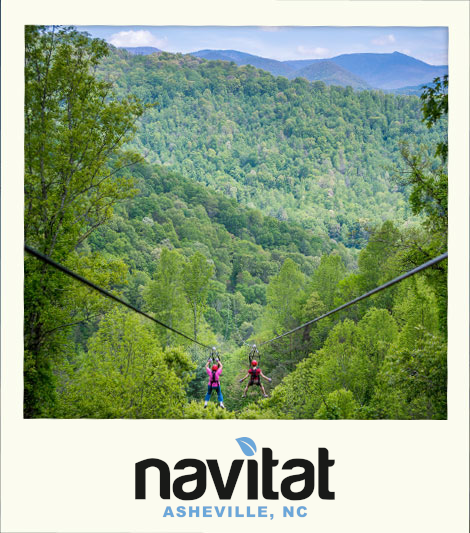
Both Navitat and the surrounding town of Asheville are known for their eye-catching beauty during the fall season. The leaves, an explosion of color against the crisp blue sky, provide an intricately detailed view that even the most skilled painter can’t capture completely. At Navitat, we’re able to provide our guests with a whole new perspective. Looking at the colorful fall leaves really is a different experience when you’re viewing them from in the trees, rather than from just down below! With Navitat’s canopy tour, you’ll have the chance to both soar through the leaves on our ziplines, as well as view them from treetop platforms, expansive sky bridges, and a few trails on the ground. Every view will show you different aspects of the colorful season, as our skilled guides share some of the intriguing nature facts they love to impart to interested guests.

Exploring nature during the Fall allows our guests to physically see the changes the ecosystem goes through, and hopefully the Navitat experience during the Fall season will help them to appreciate it in a brand new way. After all, seeing things from the opposite point of view (in and above the trees, rather than from the ground) can’t help but make you wonder what else you’ve been missing. Be sure to visit Navitat this Fall and during each season to come to experience the incredible beauty of Moody Cove as it changes and grows.

{ 0 comments }